- Remove hardware latency first, because no amount of practice fixes a slow setup.
- Short, focused daily practice beats long marathon sessions.
- Much of what looks like faster reflexes is better anticipation and crosshair placement.
- Expect gains of about 5 to 15 ms in reaction tests, and bigger gains in real-game performance.
Reflexes in first-person shooters come from three things: the speed of your nervous system, the latency of your equipment, and how well you predict what is about to happen. You can improve the last two much more than the first. These five methods are ordered by how quickly they pay off.
1. Fix hardware latency first
Set your monitor to its highest refresh rate in the operating system (a common mistake is leaving a 144Hz screen on 60Hz), use a wired mouse at 500 to 1000Hz polling, enable your display's game mode, and cap or tune your frame rate. Our refresh rate guide shows what each step is worth.
2. Do deliberate aim training in short blocks
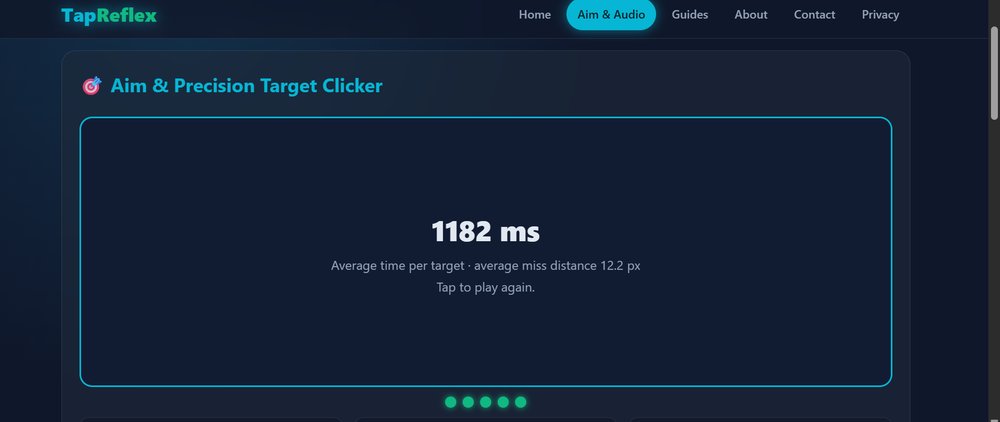
Spend 15 to 20 minutes a day on focused aim practice rather than hours of casual play. Work on one skill at a time, such as flicking to static targets, tracking moving targets or switching between targets, and stop when your accuracy drops from fatigue. Use the TapReflex aim test as a quick warm-up and log your average weekly.
3. Train crosshair placement and anticipation
Keep your crosshair at head height and aimed where an enemy is most likely to appear. This shortens the distance you need to move before you shoot, which reduces total reaction time more than any raw reflex gain. Learn common angles and timings in each map, so you begin reacting before the target is fully visible.
4. Use a consistent warm-up and settings
Muscle memory depends on consistency. Keep the same mouse sensitivity, grip and desk setup, and warm up for five minutes with simple tracking and flicking before ranked play. Take the reaction test as part of your warm-up to check your alertness: a day when you are 20 ms slower than your average is a day to rest rather than grind.
5. Protect sleep, hydration and focus
Alertness has a large effect on reaction speed. Aim for 7 to 9 hours of sleep, drink water regularly, and time any caffeine so it does not disturb your sleep. Short breaks every 45 to 60 minutes keep your attention sharp during long sessions.
A simple four-week plan
| Week | Daily routine (about 25 minutes) | Goal |
|---|---|---|
| 1 | Fix hardware, 5 min warm-up, 15 min aim drills, log reaction test average | Set your baseline |
| 2 | Add 10 minutes of crosshair placement practice in deathmatch | Fewer large flicks |
| 3 | Add tracking drills, keep logging averages | Smoother tracking |
| 4 | Review the logged averages and match footage, then adjust one weakness | Compare with week 1 |
Tracking real progress
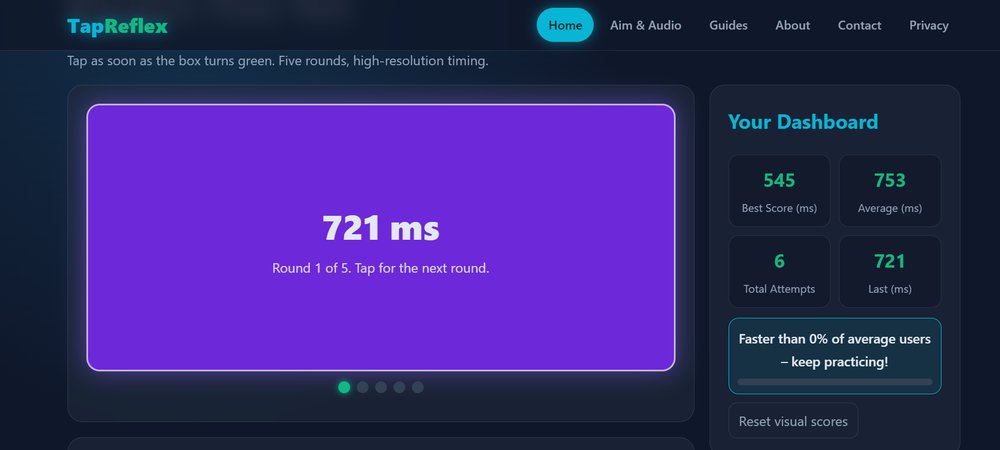
Judge progress by weekly averages, not single results, because one attempt can vary by 20 to 30 ms. If your reaction test average improves by only a few milliseconds while your in-game results improve a lot, that is normal: most gains come from anticipation and better habits rather than faster nerves. For the science behind this, see how reaction time differs by sense.